Claire Parris Counselling
COUNSELLING & PSYCHOTHERAPY IN Guildford & bagshot, Surrey
Welcome to
Claire Parris Counselling
A Safe Place to Grow
About me
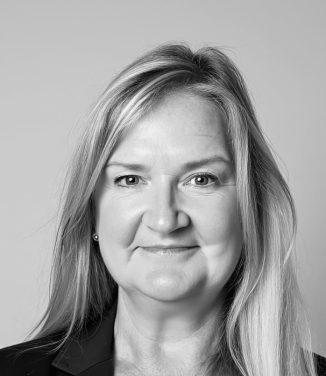
I am a fully qualified integrative counsellor offering a warm, reflective, and compassionate space for adults to explore whatever they may be carrying. My work is grounded in an attachment-based approach, which means I am interested not only in what has happened to you, but in how your experiences, past and present, have shaped the way you relate to yourself, to others, and to the world around you.
Before establishing my private practice, I worked extensively within palliative care settings, including in a hospice setting, The Brain Tumour Charity and currently within a hospital cancer unit. I continue to support individuals and their families navigating the emotional impact of cancer, loss, and life-limiting illness. This work has deeply shaped my understanding of grief, resilience, and what it means to live alongside uncertainty.
Alongside this, I have experience supporting clients with anxiety, depression, life transitions, neurodiversity, menopause, and relationship difficulties. I recognise that seeking therapy can feel like a significant step, and I aim to offer a space where you feel safe, heard, and not judged - where we can think together at your pace.
My training includes a BSc (Hons) in Reflective Therapeutic Practice from the Metanoia Institute in London, a leading centre for psychotherapy training. My initial training was through the CPCAB framework. I have a research background in the social sciences and law and previously worked as a sixth form teacher, youth mentor and parent advocate for The National Autistic Society. I continue to deepen my work through ongoing professional development in attachment-based psychotherapy.

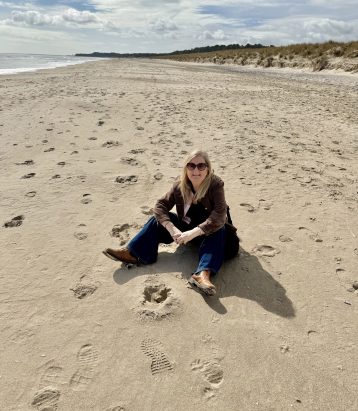
At the heart of my work is the belief that the therapeutic relationship itself can be a place of healing. I strive to offer a consistent and reliable presence - someone alongside you as you make sense of your experiences, develop greater self-understanding, and find new ways of being.
I am a registered member of the British Association for Counselling and Psychotherapy (BACP) and work in accordance with their Ethical Framework. This means I am committed to working safely, ethically, and in a way that prioritises your wellbeing at all times.

Qualifications and training
- Level 2 CPCAB Counselling Skills 2020
- Level 3 CPCAB Counselling Studies 2022
- Level 4 CPCAB Diploma in Therapeutic Counselling 2022-2024
- TA101 Iron Mill College, Exeter 2024
- BSc (Hons) Counselling: Reflective and Therapeutic Practice, Metanoia Institute, London 2024-2025
- Level 5 CPCAB Diploma in Attachment Based Psychotherapy Optima 2025-6
- MSc Medical Sociology, Royal Holloway, University of London 2003
- MRes Social Anthropology Brunel, University of London 2019 (Distinction)
My approach
My approach is grounded in attachment-based psychotherapy, which places the therapeutic relationship at the heart of the work.
How I can help
You might be coming to therapy with a clear issue, or simply a sense that something doesn’t feel right. Whatever brings you, I will work alongside you with care, curiosity, and respect.
Therapeutic writing
Creative writing can offer a powerful and often unexpected way of making sense of our inner world.
What my clients say...
Session information
How I work
I offer open-ended therapy, allowing space for deeper, ongoing exploration, as well as short-term work where appropriate.
We can think together about what feels right for you and review this as therapy progresses.
Session length
Sessions last 50 minutes and usually take place on a weekly basis, at a regular time.
This consistency helps to build a secure and reliable therapeutic relationship, which is an important part of the work.
Sessions are available
• In person
• Online via secure video
I offer individual counselling for adults aged 18 and over in a safe, confidential, and supportive space.
Fees
• £60 per 50-minute session. Payment is usually made by bank transfer prior to the session.
I offer a limited number of concessionary rates for students, those on lower incomes and NHS workers. Please feel free to ask me about availability.
Initial Session
I initially offer a free, no obligation 20 minute session over the telephone or online to see if I am the sort of therapist you are looking for and to begin to explore what brings you to therapy. This also gives you the opportunity to get a sense of the way I work and whether you would feel comfortable working with me. Sessions are usually weekly but I am happy to meet your needs on an individual basis.
Cancellations
If you need to cancel or rearrange a session, I ask for at least 48 hours’ notice.
Sessions cancelled with less notice may be charged in full.
Location
I offer face-to-face sessions at Wellshare, 54 Quarry St, Guildford GU1 3UA and The Integral Life Centre 44 High Street Bagshot GU19 5AW.
I also offer online counselling and psychotherapy sessions to people throughout the UK via Zoom.
Get in touch
If you would like to arrange an initial session or have any questions, please feel free to get in touch. I aim to respond to all enquiries within 24–48 hours.
You can also call me on 07791 801398 if you would prefer to leave a message or speak to me first. I am happy to discuss any queries or questions you may have prior to arranging an initial appointment.
All contact is strictly confidential.
Frequently asked questions
Many therapists tend to view Counselling as ‘short-term’ work; when someone has a problem that can be looked at and discussed in a clearly-resolvable way. This work often requires undertaking sessions for a certain number of weeks, to explore, discover and clarify a way forward. Therapy is a word used more to describe ‘long-term’ work; discussion that tends towards substantial issues and things that might be life-changing on a deeper level.
Whether counselling or therapy work best as a short- or long-term option depends on the client though, and the difficulties they are facing. In some cases counselling can prove helpful as a continuing, longer-term option, or therapy can help resolve an issue in just a few sessions.
There’s no fixed or ideal length of time for the counselling process; it varies from person to person and will often depend on the depth of the issues they are facing. While I can work on an open-ended basis with clients, I find it is helpful for us to both agree before we start on undertaking a certain number of sessions and reviewing where we are at once we reach that point. You are able to decide how long your therapy willl last, and in return my aim is to make sure therapy continues for only as long as it is of benefit to you.
This depends on what your needs are. Some people find that after only a very few sessions they have some clarity and focus and are ready to end the therapy. Other people value the ongoing support and relationship with me and will continue to come for weeks, months, or even years. There is no 'one-size-fits-all' when it comes to therapy.
My aim is to offer you a first appointment, known as an assessment session within 1-2 weeks, this is once we receive your completed client pack back. However, waiting times will vary according to pressure on our resources, your own availability and the service you seek.
An appointment to our short term counselling, which is not subsidised, can be offered within about one week.
Confidentiality is one of the main ways in which therapy differs from many other forms of helping - for example, talking to friends or family can rarely offer the same degree of confidentiality as talking to a counsellor. Because of this confidentiality, you will find that - as you get used to coming for therapy - you are freer to talk about whatever you wish to.
No therapist can offer 100% confidentiality: there are some situations where the law requires disclosure of risk (e.g. certain child protection issues) and in common with most other therapists, there are some situations where I may not be able to keep total confidentiality. In particular, if someone tells me that they are thinking of harming themselves in a way that I believe puts them at serious risk, or if someone tells me that they are doing something that could put others at risk, I may not be able to keep such information confidential. However, breaking confidentiality is rare, and only happens after talking to the person concerned.
© Claire Parris Counselling
powered by WebHealer